
Contributor Platform
Evaratus
In production
Team
Naman Bhalla ( PM )
Shreyansh S ( Manager )

Background
Evaratus, an initiative by Scaler, connects specialists with AI training projects for frontier labs and enterprise teams. Contributors earn payouts by completing tasks like data creation and response evaluation.
Contributors
The experience serves professionals from a wide range of backgrounds—including software engineers, healthcare professionals, researchers, writers, and many others—each project drawing on the expertise it specifically requires.

Explore(1) and Payouts(2) before the redesign.
Supporting an expanding group of subject matter experts required clearer product navigation, eliminating payout ambiguity, and building secure account verification—critical steps in transitioning the platform from an internal pilot tool into an enterprise-grade experience.
During my time on the team, I worked closely with product managers and engineers to translate evolving requirements into design decisions, with a focus on improving clarity across key interactions.

Contributor Journey
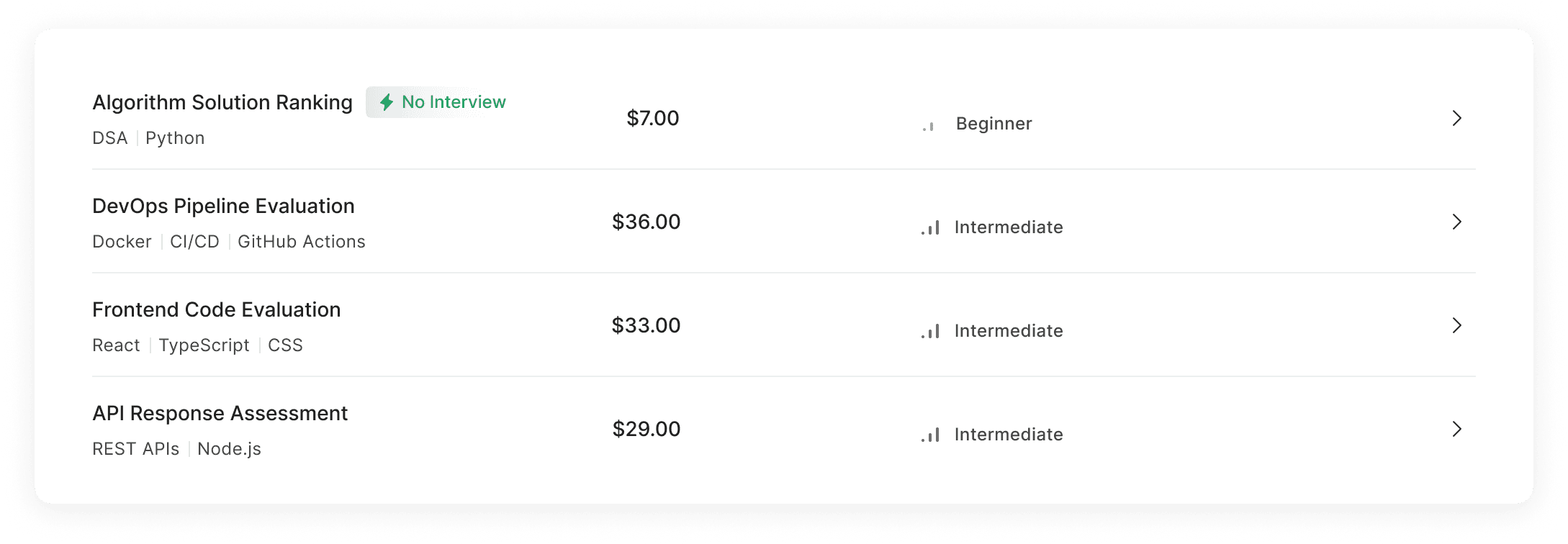
New Project Listing
I brought some of this information into the project listing so that people could get a better sense of each opportunity before opening it.

Explore Section
The updated Explore experience made key project information available earlier in the journey, making it easier to compare opportunities and decide which ones to explore further.
Payouts
Work could now span multiple projects within the same payout cycle, with each project containing hundreds—or even thousands—of individual tasks. While earnings accumulated task by task, payouts were ultimately received as a single bi-weekly settlement.
The existing payout history showed each completed task as an individual row, making it increasingly difficult to understand what had been paid, when it had been paid, and which projects contributed to a settlement.

Usage Scenarios
At lower volumes, this structure was manageable. As activity increased, however, a single payout period could produce hundreds of ungrouped entries without clear cycle boundaries or project-level subtotals.

Defining Succcess
A payout is the culmination of work completed across projects and tasks. The final amount brings the settlement into view while retaining the underlying work for deeper review.

Payouts Section
Financial history shouldn’t require downloading a separate statement to audit earnings. The main transaction summary could therefore live directly on screen, while the underlying details remained available for verification and reconciliation.

Settlement breakdown shown in context.
Not all work completed during a payout cycle was immediately eligible for payment. Tasks could remain "In review" while the cycle continued, creating a clear distinction between what had been completed and what would actually be paid.

Project contents in review
Clear payment eligibility helped reduce ambiguity around earnings and gave the payout process greater predictability.
Account Settings
Over time, configurations had grown organically into isolated silos. Payout setup sat inside payouts, conflating account management with financial history tracking.

Original Account Section
I proposed decoupling operational settings from earnings history entirely. Establishing this clear functional boundary allowed earnings history to serve purely as an income ledger, while settings became the centralized hub for preferences, identity, and payout destinations.

Unifying component behaviors across surfaces made new interface patterns feel like natural extensions of the platform, creating more cohesive and predictable interactions.

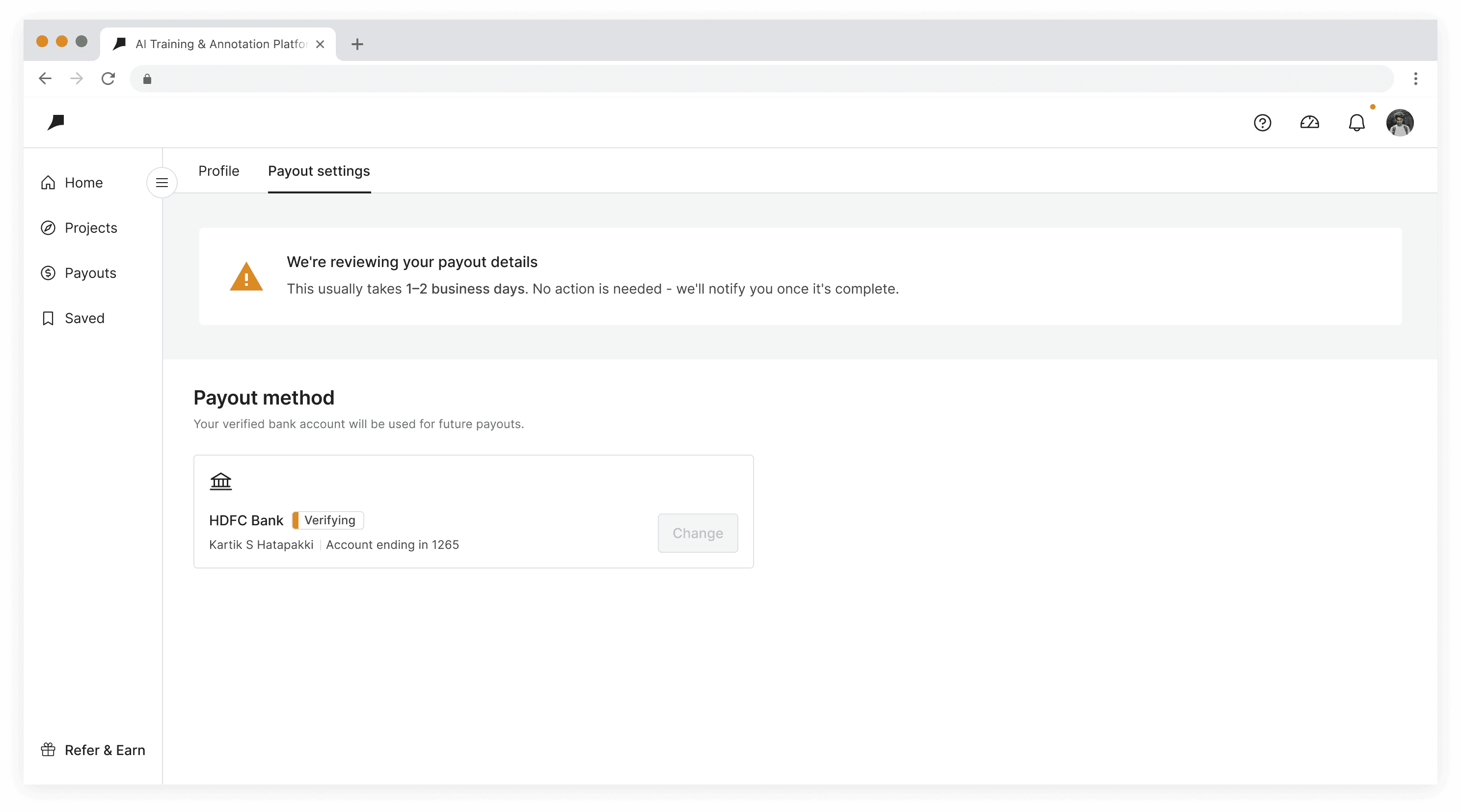
During early testing, bank transfer setup emerged as a particularly sensitive part of the onboarding experience. A single mistyped routing number doesn't just trigger an error message—it misdirects earnings. Treating submission as completion created a blind spot: the details had been provided, but there was no visible indication that verification was still taking place.

Bank Transfer
To prevent misdirected payouts and provide reassurance during this critical step, I restructured financial onboarding around two deliberate checkpoints:
Pre-submission Confirmation: Gives people an opportunity to review their account details before submission.
Verification Status: Makes the existing verification process visible by introducing a “Verifying” state between submission and activation, clarifying that the details were still being validated and when the payout method would be ready to use.
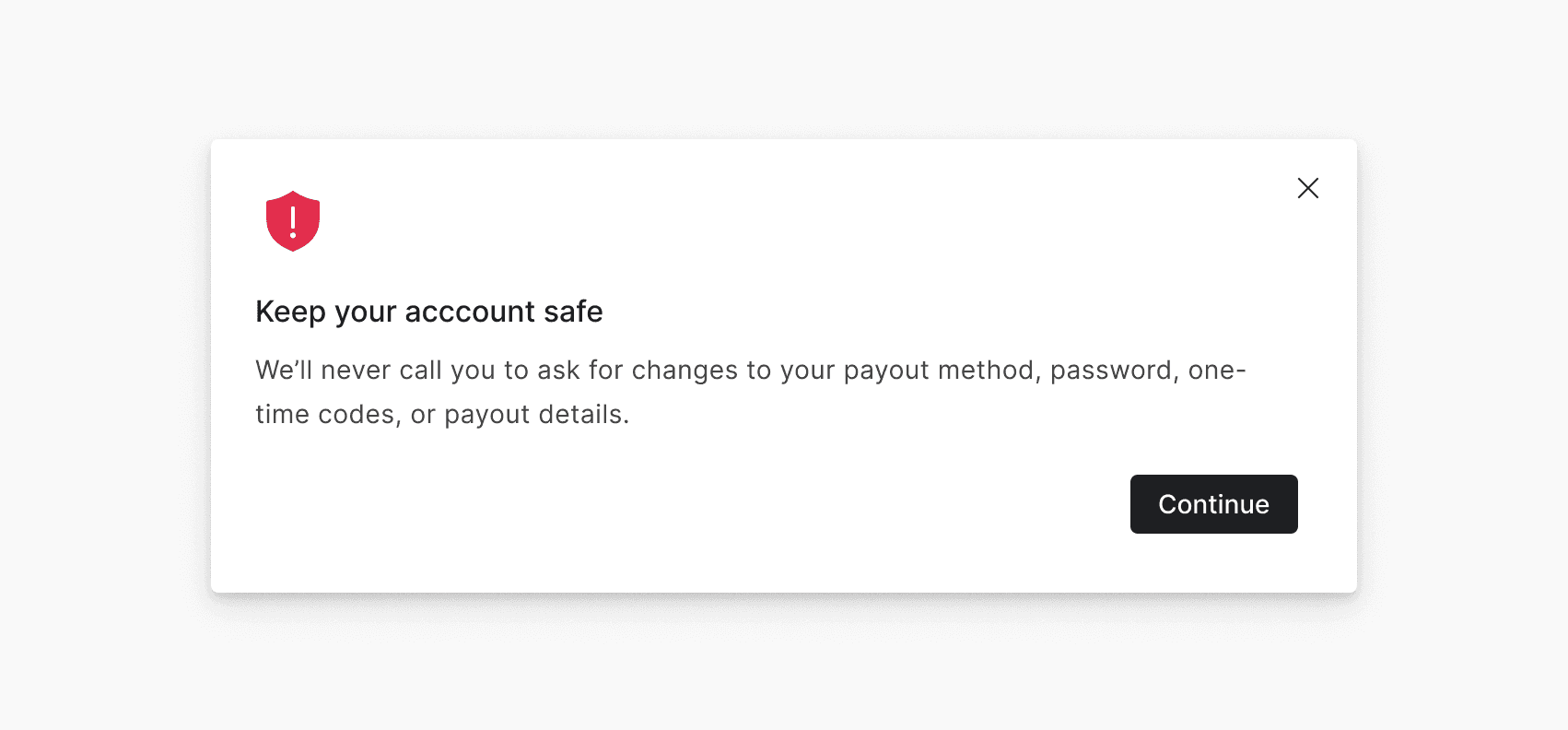
Details being sensitive, defining a clear boundary between legitimate communication and requests that should never come from the team was essential. Building trust relied on offering contributors clarity at the right moment, without raising concerns.
Third-party integrations introduced another transition outside the product, making the return journey important for maintaining context and continuity.

Paypal Setup
Defined component states and real-time inline validation directly within the modal ensured a self-contained flow while maintaining visual and functional consistency.

Final thoughts
Designing an evolving experience with all the necessary applications was a huge challenge in a timebound project. Through collaborative workshops with stakeholders and user research, we aligned on core needs to chart the right path forward. Defining distinct modules and predictable data patterns established a reliable foundation, enabling the platform to scale.
As of June 2026, Evaratus remains in active beta with capabilities continuing to roll out in phases. To evaluate effectiveness, success was measured using:
Ease of use
Overall user satisfaction
Testing also showed marked reductions in payout status inquiries and higher confidence during financial setup.

Thankyou :)